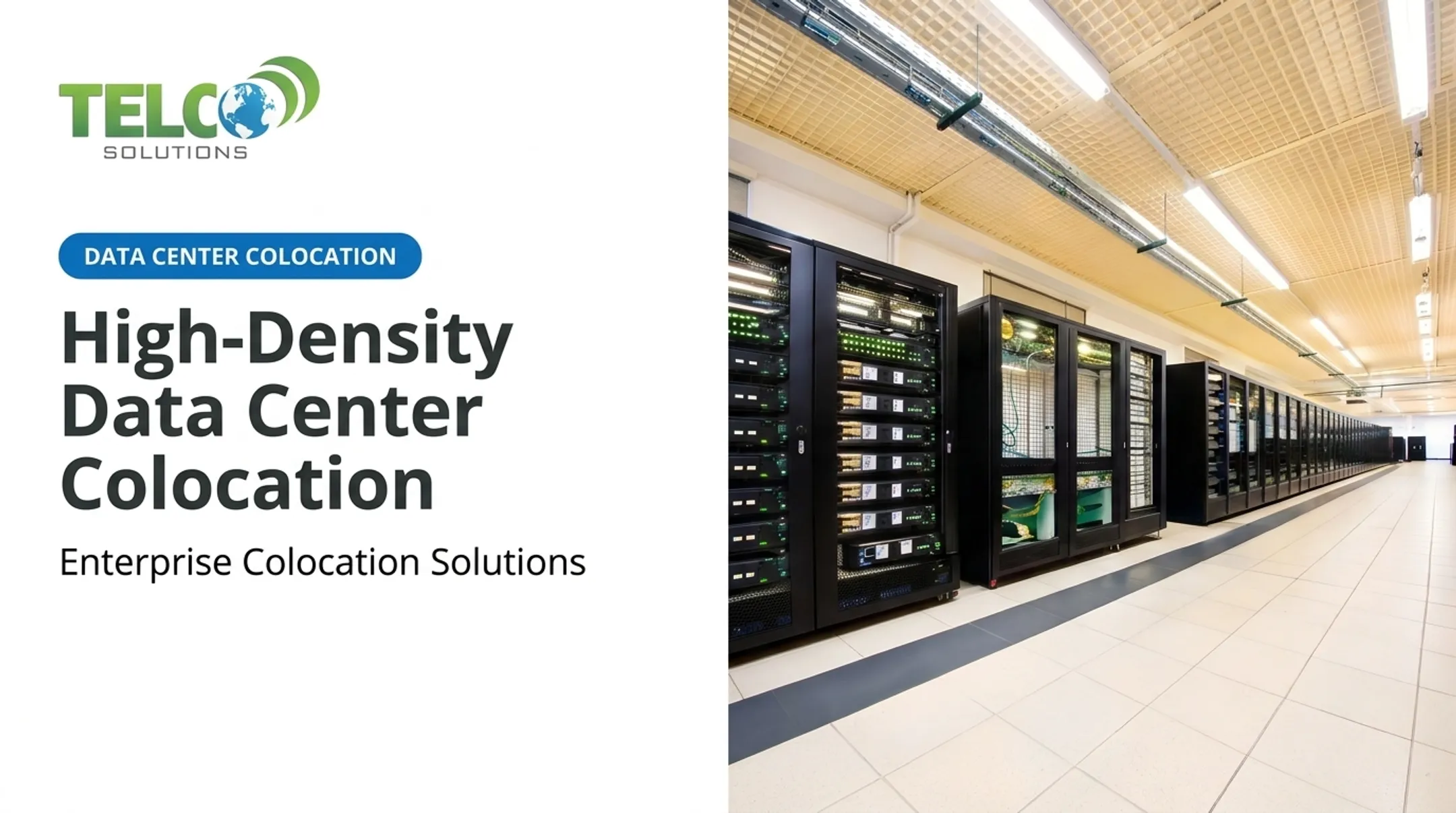

Colocation offers that other way. It lets a business keep its own servers and networking equipment while a third-party facility handles the building, power, cooling, and physical security around it. You keep the control. Someone else keeps the lights on.
This guide breaks down what colocation actually means, compares retail, wholesale, managed, and hybrid models, and walks through the real benefits and costs U.S. businesses should weigh before signing a contract.
Key Takeaways
- Colocation means renting space in a third-party facility for equipment you own and control.
- Retail fits small footprints; wholesale fits large deployments; managed adds support; hybrid mixes colocation with cloud or on-prem.
- You gain shared infrastructure costs, stronger resilience, easier scaling, tighter physical security, and better connectivity.
- Compare total cost, location, power, network diversity, and SLAs—not just headline rack pricing.
What Is a Colocation Data Center?
Colocation (often shortened to "colo") means renting space inside a professionally run data center for equipment you already own, rather than building and operating your own facility. Equinix describes the model as placing customer-owned servers and hardware in a third-party facility that supplies the building environment.
The responsibility split is straightforward:
- You own and manage: servers, applications, operating systems, and data
- The provider supplies: the building, racks or suites, power, cooling, physical security, and facility operations
A data center is not the same thing as colocation. A data center is the physical facility itself. Colocation is the arrangement — the service model that lets independent customers rent space inside that facility. Not every data center offers colocation, but every colocation provider operates within one.

Types of Colocation Data Centers
Not every business needs the same footprint or level of support. Colocation generally falls into four models.
Retail Colocation
Retail colocation covers smaller leases: a single rack unit, a partial or full cabinet, or a small caged area. This model suits:
- Small businesses replacing an outgrown server closet
- Growing firms with modest, predictable hardware needs
- Organizations that want simple, standardized pricing without a major commitment
Wholesale Colocation
Wholesale colocation means leasing much larger footprints, often entire data halls or dedicated power capacity measured in hundreds of kilowatts. It's typically built for:
- Enterprises with large-scale infrastructure
- Government agencies with significant compute needs
- MSPs and technology companies with internal technical teams to manage deployment
Managed Colocation
Managed colocation adds provider-delivered support on top of a standard lease, such as monitoring, patching, backup, procurement, or remote-hands assistance. You still own the physical space and typically still own the equipment.
Equinix's Smart Hands service is a clear example: on-site technicians handle installation, troubleshooting, and equipment management inside your cage or cabinet, priced and scoped as a separate service.
Hybrid Colocation
Hybrid colocation combines colocated hardware with public cloud, private cloud, or on-premises systems. Some providers, like CoreSite, build in direct cloud on-ramps specifically for this purpose.
Treat hybrid less as a separate facility type and more as a deployment strategy. It supports flexible workload placement, added resilience, and cost control, but it needs careful architecture planning across every connected environment.

Matching the Model to Business Requirements
Use this quick framework:
- Rack footprint and power density: a few servers vs. a dedicated hall
- Hardware ownership: do you already own equipment, or are you starting fresh?
- IT staffing: can your team handle remote management, or do you need hands-on support?
- Growth plans: will you need to scale quickly?
- Compliance requirements: does your industry demand specific controls?
- Cloud or multi-site connectivity: do workloads need to reach AWS, Azure, or other offices?
Benefits of Colocation Data Centers
Shared Infrastructure and Cost Efficiency
Building a private data center means funding construction, utility contracts, cooling systems, and security from scratch. Colocation spreads those costs across many tenants.
According to the U.S. Department of Energy's 2024 data center design guide, colocation and cloud models can carry a lower first cost—and sometimes lower operating costs—than on-premises facilities, depending on the deployment. Treat savings estimates as directional, not guaranteed. Your actual numbers hinge on density, location, and contract terms.
Reliability and Business Continuity
Redundant power, backup generators, multiple cooling paths, and diverse network routes all reduce operational risk. TelcoSolutions works with facilities built to Tier III and Tier IV design standards, typically backed by UPS systems and diesel generators, with many offering 99.99%+ uptime SLAs.
Actual resilience still depends on:
- The facility's specific redundancy level (N, N+1, 2N)
- The provider's maintenance discipline
- Your own architecture and failover planning
A Tier label is a design description, not an uptime guarantee. Ask for the SLA's measured commitment.

Security and Compliance Support
Layered physical security typically includes controlled entry points, 24/7 surveillance, biometric access control, and multi-factor authentication for visitors and staff. Logical security (protecting the data and applications on your equipment) remains your responsibility.
Facility certifications like SOC 2 or PCI DSS validation can support compliance efforts, but they don't automatically make your entire environment compliant. Always request the current report and confirm its scope.
Scalability and Flexibility
Need more rack space next quarter? Colocation lets you add capacity, power, and connectivity without designing a new building. Scaling still has real limits:
- Available capacity at your specific facility
- Contract terms and minimum commitments
- Deployment lead times for new racks or power circuits
- Cooling limits for high-density equipment
Connectivity and Operational Focus
Carrier-neutral facilities open access to multiple network providers, private connections, and direct cloud on-ramps. That mix is especially useful for VoIP, hybrid cloud workloads, and distributed offices.
Operational gains include:
- Choosing among carriers instead of locking into one network path
- Reaching cloud providers over private interconnects
- Offloading facility tasks to remote-hands support
- Freeing internal IT to focus on applications and security priorities

Colocation vs. Alternatives: Which Businesses Benefit Most?
Colocation vs. on-premises: Colocation removes the burden of funding and operating your own power, cooling, security, and space. On-premises keeps everything under direct control, but you shoulder every operational cost and risk yourself.
Colocation vs. cloud and managed hosting: Colocation preserves control over hardware you already own, which helps when you run specialized or legacy equipment. Cloud and managed hosting offer faster provisioning and less hardware administration, but less physical control. Many organizations use a hybrid architecture that blends both.
Colocation fits best for:
- Mid-market firms without a full in-house IT department
- Businesses running legacy or specialized hardware
- Companies outgrowing their office server room
- Organizations needing predictable workloads with secure connectivity
- MSPs supporting multiple client environments
If you don’t already own hardware or need specialized equipment, fully cloud-based services may be the simpler path.
Colocation Costs and How to Choose a Provider
Pricing Components
Request an itemized quote covering:
- Physical space (rack, cabinet, or suite)
- Power allocation or metered usage
- Cooling
- Bandwidth and cross-connects
- Installation and equipment transport
- Remote hands, monitoring, and backup
- Managed services, taxes, and security add-ons
Total Cost and Contract Terms
Location, power density, redundancy level, contract length, and support coverage all shift pricing.
According to CBRE's North America Data Center Trends report, average colocation rates sat near $163 per kW/month in early 2024 and were heading toward $200+ per kW/month for larger requirements by 2025. Those figures are wholesale-market indicators, not a quote for your rack, but they show pricing has been climbing.
Before signing, check for:
- Setup charges and power overage fees
- Annual price increases
- Minimum commitments and renewal terms
- Early termination fees and equipment removal costs
Facility Location and Technical Capacity
For U.S. deployments, weigh:
- Latency to your offices and users
- Proximity to network and cloud connectivity hubs
- Exposure to severe weather or regional risk
- Data jurisdiction requirements
- Available rack space, power density, and cooling design for future growth
SLAs, Security, Compliance, and Support
Review the SLA for uptime definitions, maintenance windows, incident response times, and outage remedies. Confirm physical access controls, compliance documentation, backup practices, remote-hands scope, and escalation procedures.
If you run high-density workloads, ask whether the facility supports liquid cooling.
Due Diligence Before Signing
Request these before committing:
- An itemized proposal covering every fee category
- A facility tour or virtual walkthrough
- Uptime history and customer references
- Current compliance reports
- A network-carrier list and disaster recovery documentation
- A clear migration and installation plan

Compare providers on total value and operational fit, not just the lowest headline rack price.
Conclusion
Colocation is an infrastructure strategy that pairs professional facility operations, resilience, security, and connectivity with the control of owning your own equipment. The right model — retail, wholesale, managed, or hybrid — depends on your workload, risk tolerance, and growth trajectory.
Before choosing a provider, map out your actual infrastructure needs and total cost over several years, not just next quarter's budget. TelcoSolutions works with a network of over 300 providers to help businesses coordinate colocation alongside internet, telecom, and IT strategy. Reach out for a tailored consultation on what fits your organization.
Frequently Asked Questions
How much does data center colocation cost?
Pricing varies by space, power, bandwidth, location, redundancy, and contract terms. Rather than relying on a generic rate, request an itemized quote covering every fee category upfront.
What are data center colocation services?
These typically include rented space, power, cooling, physical security, connectivity, monitoring, and remote-hands support. Some providers add optional managed services like backup and patching.
What is colocation in data centers?
Colocation means a business places its own servers and networking equipment inside a third-party data center. The provider supplies the building, power, cooling, and physical security infrastructure.
What is the difference between a data center and a colocation?
A data center is the physical facility itself. Colocation is the service arrangement in which independent customers rent space inside that facility for their own equipment.
What are the three main types of colocation data centers?
The three core types are retail, wholesale, and managed colocation. Hybrid colocation is a related strategy that combines colocated infrastructure with cloud or on-premises resources.
What is colocation hosting?
Colocation hosting places customer-owned servers inside a provider-operated facility. This differs from traditional hosting, where the provider typically supplies and manages the servers themselves.