
The choice affects more than your monthly bill. It touches call quality, employee mobility, cybersecurity, maintenance workload, and how well your business can scale.
The market has already shifted. As of June 2025, the FCC counted 43.972 million business interconnected VoIP connections versus just 8.612 million switched-access lines nationwide, according to the FCC's Voice Telephone Services report. That's connection data, not a business-adoption percentage, but it shows where the infrastructure is heading. Add in FCC guidance that carriers can retire copper lines with as little as 90-180 days notice, and legacy-PBX businesses have a real reason to plan ahead.
Key Takeaways
- Traditional PBX keeps call control on-site, but you own the hardware, maintenance, and specialist support
- VoIP moves infrastructure to the provider, so teams can work remotely and scale without new on-site gear
- Total cost of ownership matters more than the monthly subscription price
- Hybrid options like SIP trunking let you modernize without a full rip-and-replace
- Choose based on network readiness, security needs, and growth plans—not brand familiarity alone
PBX vs VoIP: Quick Comparison
Connection and Architecture
A traditional on-premises PBX uses dedicated telephone lines or carrier connections with local switching hardware sitting in a closet or server room. An IP PBX works differently, moving call signaling onto IP while sometimes still living on your premises.
VoIP converts voice into digital data packets and sends them over an IP network. Calls can land on desk phones, laptops, mobile apps, or a provider's cloud infrastructure.
Cost and Ownership
Traditional PBX costs stack up fast:
- Hardware purchase and installation
- Proprietary phones
- Line charges and carrier fees
- Ongoing maintenance and software upgrades
- Internal IT time to keep it running
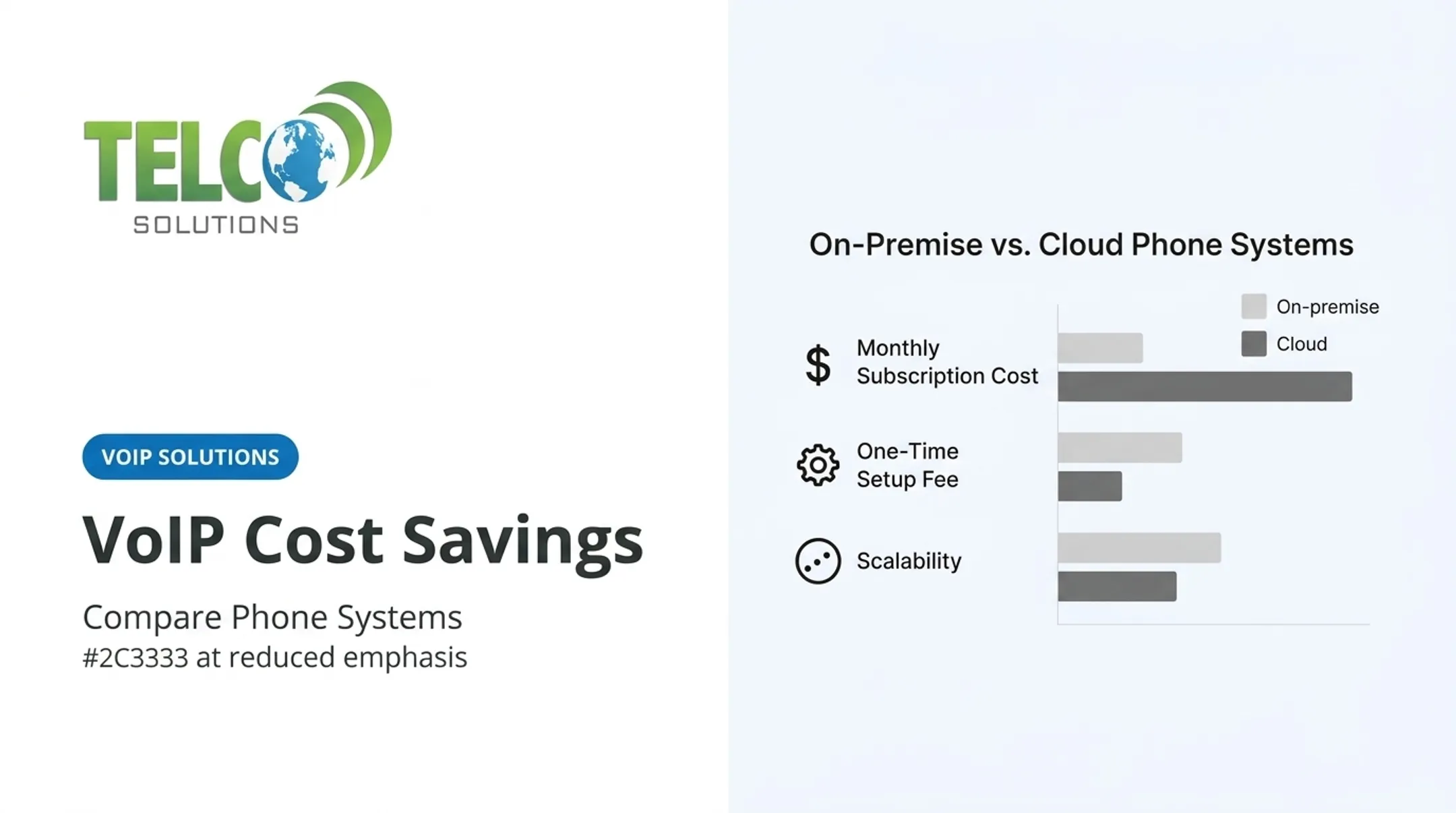
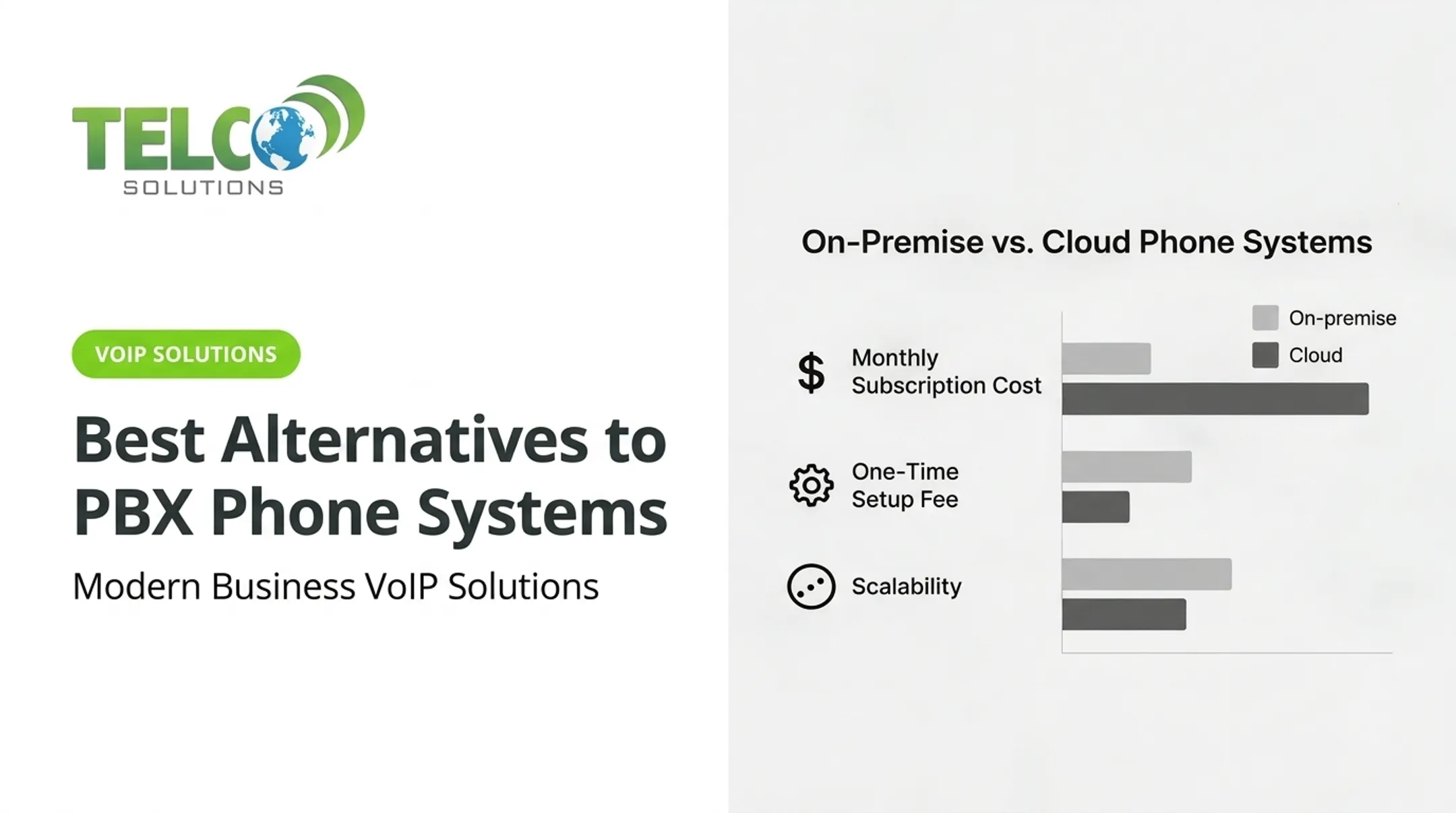
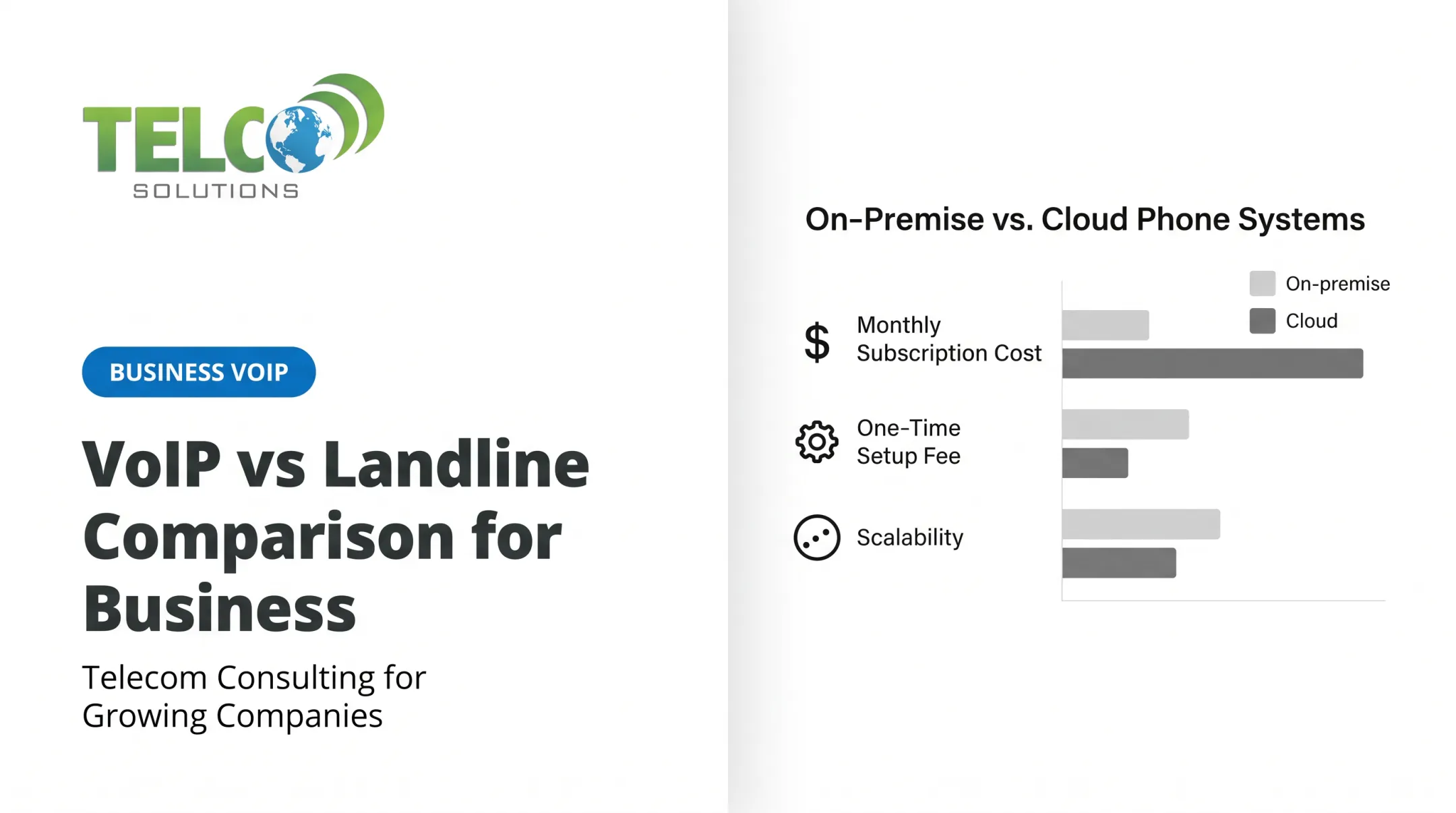
VoIP shifts the cost structure toward subscriptions. Vonage's 2026 pricing guide puts hosted VoIP typically between $20 and $30 per user monthly, though the range runs $10-$40 depending on features.
Plan for these extras as well:
- Compatible endpoints
- Enough internet bandwidth
- Implementation support
Scalability and Mobility
PBX: Adding users often means new cards, wiring, licenses, or hardware. Growth is tied to your physical office.
VoIP: You add new users through a software portal in minutes. Staff can work from desk phones, softphones, or mobile apps from any approved internet connection.
Features and Integrations
| Feature | Traditional PBX | VoIP |
|---|---|---|
| Extensions, transfers, voicemail | Standard | Standard |
| Auto-attendant, call queues | Available, often hardware-limited | Standard, software-based |
| Mobile app access | Rare without add-ons | Built-in |
| CRM/help-desk integration | Requires extra investment | Common |
| Analytics and reporting | Limited | Typically included |

Reliability, Security, and Support
PBX has less exposure to internet-based attacks, but it still carries real risks:
- Physical hardware failure
- Power loss
- Toll fraud
- Aging equipment nobody can service anymore
VoIP depends on internet and power availability. Providers typically address this with encryption, network segmentation, fraud monitoring, and failover routing — but you still need to verify emergency-calling setup and service-level commitments.
What is PBX?
PBX stands for Private Branch Exchange. It's the system that connects internal extensions and routes inbound and outbound calls through a central switchboard. The term describes call-management functionality, not one connection type. That is why "PBX," "IP PBX," and "hosted PBX" often get confused.
- Traditional on-premises PBX: Physical hardware, copper wiring, local switching
- IP PBX: Same call-control concept, but signaling runs over IP, sometimes still on-premises
- Hosted PBX: The call-management system moves into a provider's cloud, delivered via VoIP
Why Some Businesses Keep On-Premises PBX
An on-premises PBX offers local control, predictable internal calling, and compatibility with equipment you already own. If you've recently invested in hardware, it can make sense to keep using it rather than write off that spend.
The Trade-offs
- Significant upfront hardware investment
- Proprietary equipment that locks you into specific vendors
- Specialist configuration and manual upgrades
- Physical failure points (a blown card can mean real downtime)
- Need for an internal owner or support partner
Before you keep or replace a PBX, pull together:
- System age and vendor support status
- Carrier contract terms
- Number inventory, extensions, and call flows
Incomplete information leads to expensive missteps.
When Keeping a PBX Still Makes Sense
Retaining a PBX often makes sense when:
- You've recently invested in equipment with years of useful life left
- Staff work primarily on-site with limited remote-work needs
- You have capable internal IT support
- You need a carefully controlled, slow migration timeline
A Charlotte, North Carolina manufacturing firm took a middle path: it added an FXO gateway so its legacy PBX could use modern SIP trunking. The firm kept its hardware, avoided a rip-and-replace project, cut monthly call costs, and reached payback in under a year.

What is VoIP?
VoIP — Voice over Internet Protocol — captures voice, converts it into data packets, sends them across an IP network, and reconstructs the audio on the other end. The whole trip happens in milliseconds.
Separate the terms: VoIP is the transmission technology. A hosted or cloud PBX is the business phone system that uses VoIP to deliver extensions, routing, voicemail, and administration.
Operational Benefits
- Flexible endpoints (desk phone, laptop, mobile app)
- Support for remote and hybrid teams
- Fast user provisioning through a web portal
- Multi-site connectivity under one system
- Integration with CRM and help-desk tools
What You Need to Make It Work
VoIP is unforgiving about network quality. NIST guidance notes that packet loss as low as 1% can garble a call, and Cisco's engineering documentation caps acceptable one-way delay around 150 ms. Before switching, confirm:
- Bandwidth — each simultaneous call needs roughly 100 kbps up and down
- Latency and jitter performance — test the actual path, not just advertised speeds
- Network prioritization (QoS) — voice traffic needs priority over general data
- Power backup — a UPS keeps your router and modem alive during short outages
- A documented failover plan — what happens if the internet drops?

Security Responsibilities
VoIP security isn't just the provider's job. On your side:
- Confirm encryption is enabled end to end
- Use strong administrator authentication
- Segment voice traffic on the network
- Set up toll-fraud controls
NIST also recommends restricting remote PBX administration to IPsec or SSH rather than open access.
Use Cases of VoIP
VoIP fits well for:
- Small offices replacing an aging PBX — number porting and provider-managed setup keep the cutover light
- Multi-site businesses needing consistent routing and mobile access across locations
- Appointment-driven and call-heavy service businesses that need after-hours coverage and call analytics
The University of Toronto's migration is a documented scale example: over 13,000 lines moved to VoIP between 2017 and 2020, with forecasted annual telephony spend falling from $5.5 million to $2.8 million — nearly a 50% reduction. US small and midsize buyers won't match that line count, but the same cost trajectory shows up when legacy PBX maintenance and trunk fees come off the books.
PBX vs VoIP: What Is Better?
There's no universal winner here. Traditional PBX, on-premises IP PBX, hosted PBX, and broader VoIP services each carries different ownership models. The right one depends on your situation.
Look at Total Cost of Ownership, Not Just Monthly Price
A low subscription fee doesn't automatically mean lower total cost. Build your comparison around:
- Hardware and phone purchases
- Carrier charges and internet upgrades
- Security and implementation costs
- Support, licensing, and maintenance
- Number porting and staff training
- Expected replacement cycles
Assess Operational Fit
Ask yourself:
- How many users today, and how many in three years?
- Do you have multiple locations or remote staff?
- What's your call volume, and what integrations do you need?
- Does your internal IT team have bandwidth to manage a PBX?
- What's your tolerance for depending on an outside provider?
When PBX or Hybrid Makes Sense
Choose PBX or a hybrid approach if you have valuable existing equipment, strong on-site IT expertise, or specialized telephony needs. SIP trunking or a VoIP gateway can connect legacy hardware to an IP network, letting you modernize connectivity without replacing everything at once.
When Hosted VoIP Makes Sense
Choose hosted VoIP or cloud PBX when flexible work, fast scaling, multi-site consistency, and modern integrations matter more than owning hardware outright. Run a network-readiness and security assessment first.
Real World Example
The Cisco IT team's own migration illustrates why phased approaches exist. Cisco converted 55 buildings and nearly 20,000 users to IP telephony within a year as part of a larger program that eventually deployed more than 54,000 IP phones worldwide.

The problem: Legacy PBX maintenance and infrastructure costs were rising, and a vendor quote for expanding analog capacity on the old system exceeded $100,000 per building.
The approach: Rather than a single flash-cut, Cisco migrated building by building, running the legacy PBX and new IP system in parallel during the transition. A pilot group used both a Lucent PBX phone and a Cisco IP phone side by side before full cutover.
The outcome: Lower equipment and PBX-maintenance costs across the organization. Staged rollout kept disruption in check instead of an all-at-once switch.
This is a large enterprise example, not a small-business benchmark. The lesson still scales down:
- Audit your legacy dependencies
- Pilot before you commit
- Don't assume a single cutover date is realistic
If you're weighing your phone system's age, carrier contract, and connectivity against a VoIP migration, TelcoSolutions can run a tailored review first. That covers your current system, network readiness, security, and number-porting needs before you commit to either path.
Conclusion
Traditional PBX can still make sense in controlled, infrastructure-heavy environments with strong internal support. Hosted VoIP tends to fit flexible, distributed, growth-focused businesses better.
What matters most is documenting your current call flows and future needs before you request proposals. A five-year total cost comparison, a network-readiness check, and a clear security plan will tell you more than any vendor's advertised price per user.
If you want a side-by-side view across multiple carriers—not a single-vendor pitch—TelcoSolutions can help you compare hosted VoIP and PBX options against those criteria.
Frequently Asked Questions
Is a cloud phone cheaper than a landline?
It depends on your full picture: equipment, line charges, internet requirements, and calling usage all factor in. Cloud VoIP often reduces total costs, but you need a complete comparison, not just the subscription price.
What is the difference between VoIP and PBX?
VoIP is the technology for transmitting voice over IP networks. PBX is the system that manages extensions and call routing. Modern hosted PBX systems commonly use VoIP to deliver those features.
What does PBX phone system mean?
PBX stands for Private Branch Exchange: a private telephone network that connects extensions, routes calls, handles transfers, and manages features like voicemail and auto-attendants.
What is a VoIP gateway?
A VoIP gateway connects IP-based voice services with traditional phone lines or analog equipment. It's most relevant when businesses want to modernize connectivity gradually rather than replace everything at once.
Which is better for a small business, PBX or VoIP?
Hosted VoIP often suits small businesses that need low infrastructure overhead, remote access, and simple scaling. Still, check your internet quality, security needs, and any existing contracts before switching.
Can I use VoIP with my existing PBX system?
Yes, through SIP trunking or a VoIP gateway, which connects your current hardware to an IP network. Verify carrier support, call routing, and E911 requirements before making the switch.